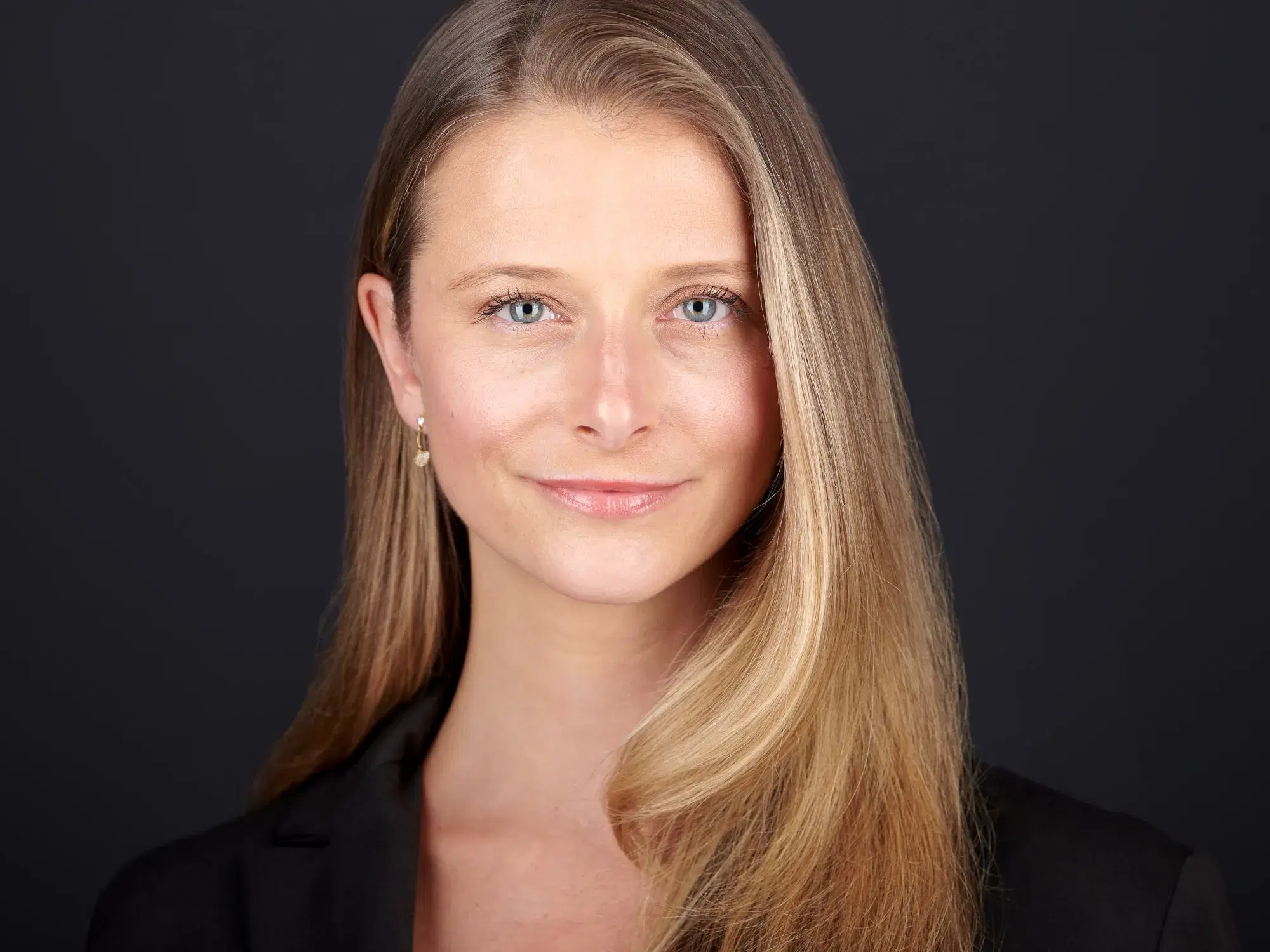
AI Headshots Are Everywhere. Should You Care?
You've probably seen the ads. Upload a few selfies, pay $30, and get a set of polished headshots in an hour. No studio, no photographer, no awkward posing. It sounds like a no-brainer.
And for some use cases, it might be. But before you decide, it's worth understanding what AI headshot generators actually do, and more importantly, what they can't do.
What AI Gets Right
AI headshot tools have gotten remarkably good at one thing: making you look polished. They can clean up skin, improve lighting, swap in professional-looking backgrounds and add a level of finish that would take a retoucher 20 minutes to achieve manually.
For someone who needs a basic profile photo quickly and doesn't want to book a session, that's genuinely useful. If you're between jobs, just joined a new platform, or need something temporary, AI can fill that gap.
What AI Gets Wrong
The problems with AI headshots fall into three categories: accuracy, authenticity and professionalism.
Accuracy first. AI doesn't photograph you. It generates a version of you. It averages your features across the selfies you uploaded and builds a composite. Sometimes the result looks close. Sometimes it changes the shape of your nose, the width of your jaw, or the spacing of your eyes in ways that are subtle but real. You might not notice. The people who know your face will.
Then there's authenticity. AI can't capture your expression, your energy, or the way you carry yourself. It can't coach you into a natural smile or catch the moment your eyes light up. It produces images that are technically clean but emotionally flat. They look like stock photos, because that's essentially what they are.
Finally, professionalism. AI headshots are increasingly recognizable. Hiring managers, clients and colleagues are learning to spot them. The lighting is too even, the background is too generic, the expression is too neutral. Using one signals that you didn't invest 30 minutes in your own professional image, and people notice.
The Uncanny Valley Problem
There's a reason AI headshots sometimes feel off even when they look technically perfect. They fall into what designers call the uncanny valley: close enough to real that your brain expects them to be real, but different enough that something feels wrong. You can't always put your finger on it, but the instinct is there.
In a professional context, that instinct works against you. If someone looks at your headshot and feels even a flicker of doubt about whether it's really you, you've already lost ground.
This isn't hypothetical. A recent LinkedIn post from a digital branding consultant promoting an AI headshot tool went viral, over 2,100 reactions. But roughly half the comments were negative. The top-rated response, with over 270 reactions, put it bluntly: AI headshots 'look a bit too perfect, you can tell it's not quite real, and it almost has the opposite effect on trust.' The commenter said she'd take a slightly messy but real photo over an artificially perfect one any day. The backlash was significant enough that the influencer eventually turned off comments. That sentiment isn't an outlier. It's becoming the mainstream reaction.
The Shiny Object Problem
Right now, AI headshots have novelty on their side. The technology is new, the results are impressive at first glance, and it feels like the future. But novelty has a short shelf life, and there's a real cost to chasing it.
The cost is truth in advertising. An AI headshot doesn't just polish you. It idealizes you. It smooths every pore, perfects every angle, presents a version of you that doesn't walk into the room. When the person who shows up to the meeting doesn't quite match the photo on the website, trust takes a hit before the conversation even starts. That's not a headshot doing its job. That's a headshot working against you.
We've seen this pattern before. When CDs replaced vinyl, the pitch was simple: no hiss, no pops, no surface noise. Pure, clean, perfect sound. And it was. Then streaming made it even more convenient, with millions of songs, anywhere, instantly. But something was lost along the way. The warmth. The texture. The feeling that what you were hearing had been physically created by real instruments in a real room.
Now vinyl is back, not because it's more convenient or technically superior, but because people crave authenticity. They want the thing that's real, even if it's imperfect, over the thing that's engineered to be flawless. Film photography is experiencing the same resurgence. Younger photographers are reaching for 35mm cameras precisely because the images feel more organic, grain, light leaks, imperfect exposure and all. Perfect isn't the point. Real is.
Headshot photography is heading down the same path. AI will always have a place for quick, low-stakes applications. But for the image that represents you professionally, the one that tells clients, colleagues and employers who you actually are, the real thing carries a weight that no algorithm can manufacture. A person stood in front of a camera. A photographer studied their face, coached their expression, waited for the right moment. That process produces something AI can approximate but never replicate: a photograph that's true.
When AI Headshots Make Sense
If you need a placeholder while you book a real session, AI is fine. If you're a student or early in your career and truly can't afford a professional headshot yet, it's better than a cropped group photo or a bathroom selfie.
For any situation where your headshot represents your business, your expertise, or your personal brand to paying clients, it's not the right tool.
What a Real Session Actually Gives You
A professional headshot session isn't just a photo. It's a coached experience. In my studio, we spend 30 to 45 minutes working through expression, posture and wardrobe. You see your shots in real time on a tethered display. I guide you through every adjustment until we capture something that looks like you on your best day, not a computer's guess at what you might look like.
You walk out with an image that's genuinely yours. It matches the person who shows up to the meeting, the interview, the client pitch. That alignment between your headshot and your real presence is something AI can't replicate.
And the session itself? Most clients say it was actually fun, and that they learned a lot. The coaching you get in a professional session doesn't just produce one great headshot. It teaches you how to carry yourself in front of any camera, even a phone. How to angle your face, where to put your chin, what to do with your eyes. You walk out with skills you'll use every time someone points a camera at you for the rest of your career. An upload form doesn't teach you anything.
The Bottom Line
AI headshots are a tool, and like any tool, they're great for certain jobs and wrong for others. If your headshot is doing real work for your career, attracting clients, building trust, landing opportunities, it's worth investing in the real thing.
Your face is your brand. It deserves better than a best guess.
If you're ready to invest in the real thing, I photograph clients at my studio in Sherborn, a quick drive from Boston, Natick, Newton, Framingham and Wellesley. For actors, the case against AI is even stronger, since casting directors need to see the real you. For corporate teams, I bring the full studio setup to your office in Cambridge, Waltham or anywhere in the metro area.
Ready to get a headshot you're actually proud of?
Book Your Session