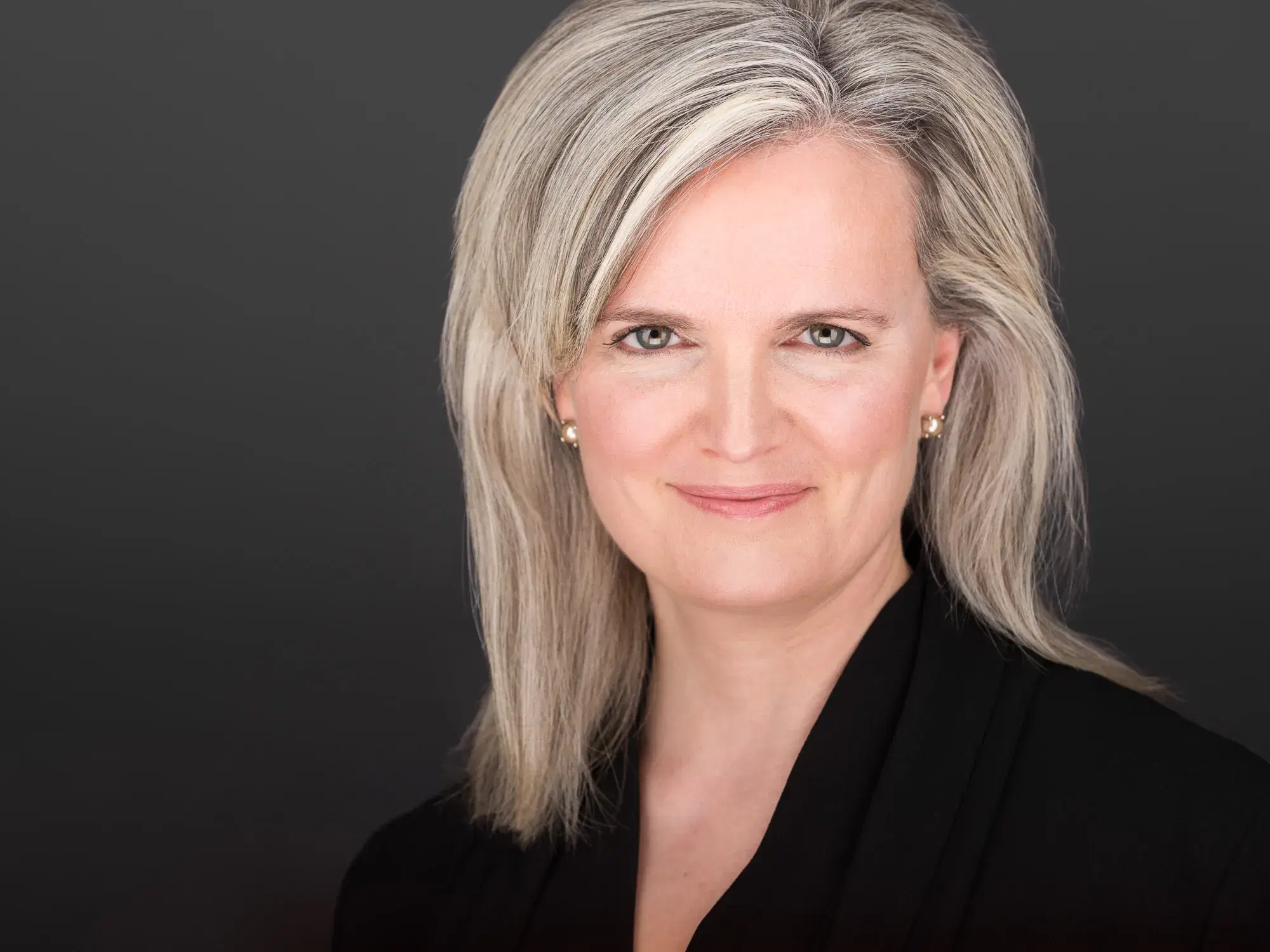
You Might Be Making These Mistakes Right Now
Most professionals know they need a headshot. Fewer know what makes one actually work. I've been shooting headshots long enough to see the same mistakes come through my door over and over, not because people don't care, but because nobody ever told them what to look for.
Here are the biggest ones I see, why they matter, and what to do about them.
Using a Photo That Doesn't Look Like You
This is the most common mistake and the most damaging. Your headshot is five years old. You've changed your hair, your weight, your glasses, your style. The photo still looks good, but it doesn't look like the person who walks into the room.
AI headshots belong in this category too. An AI generator doesn't photograph you. It builds a composite based on your selfies and averages your features into an idealized version. Sometimes it changes the shape of your nose, the width of your jaw, or the spacing of your eyes in ways that are subtle but real. The result might look polished, but it doesn't look like the person who shows up to the meeting. And people are learning to spot them: the lighting is too even, the expression is too neutral, the whole thing feels like a stock photo. Using one signals that you didn't invest 30 minutes in your own professional image.
The whole point of a headshot is to build trust before the first meeting. When there's a disconnect between the image and the reality, whether it's an old photo or an AI-generated one, that trust takes a hit before you've said a word. It doesn't matter if you looked great in the photo. What matters is whether the photo looks like you today.
The fix: update your headshot every two years, and immediately after any significant change in appearance. And if your current headshot was generated by software rather than captured by a camera, replace it.
The Big Smile
This one surprises people. A big, toothy grin feels friendly, and it is. But in a professional headshot, a big smile communicates eagerness, not authority. You end up looking like you're trying to win someone over, or sell them something, rather than standing on your own credibility.
The sweet spot is a small, natural expression, about a 2 to 4 on a scale of 1 to 10. Just enough warmth to look personable and easy to work with, without tipping into a yearbook photo. The goal is approachable confidence, not enthusiasm.
The fix: work with a photographer who coaches expression. This isn't something you can calibrate in a mirror. It takes real-time feedback and someone who knows what reads well on camera.
Overwhitened Teeth and Heavy Retouching
Retouching should be invisible. When someone looks at your headshot, they should see you, not evidence of Photoshop. Overwhitened teeth, smoothed-out skin that looks like plastic, eyes that are unnaturally bright: none of it makes you look better. It makes you look artificial.
The people viewing your headshot may not be able to articulate exactly what's wrong, but they'll feel it. It falls into the uncanny valley, close enough to real that something feels off. That instinct works against you.
The fix: choose a photographer whose retouching philosophy is 'you on your best day.' Minor blemish removal, natural skin smoothing, stray hair cleanup. Nothing that changes the fundamental reality of your face.
The Wrong Wardrobe
Busy patterns that create visual noise. Logos and graphics that pull focus. Pure white that blows out under studio lighting. Ruffles, fringe and lace that add clutter to a tightly cropped frame. A neckline that doesn't flatter. Wrinkled fabric that looks sloppy on camera. These are all fixable problems, but only if you catch them before the session, not after.
The less obvious mistake is wearing something that doesn't match your professional context. A tech founder in a three-piece suit looks as out of place as a corporate attorney in a hoodie. Your wardrobe should match the version of you that shows up to work.
The fix: bring 3 to 5 options to your session. Solid, darker colors photograph best. Let your photographer evaluate each piece under the studio lighting before you start shooting.
Doing It Yourself
Phone cameras are incredible. They are not headshot cameras. A selfie, even a well-lit one against a clean wall, lacks the lighting control, the depth of field, the resolution and the coaching that make a professional headshot work. AI headshot generators fall into the same trap from the opposite direction: they can make an image look polished, but they can't coach you through expression, capture your actual presence, or produce a photo that's genuinely you.
The bigger problem with any DIY approach is that you can't coach yourself. Expression, posture, the angle of your jaw, the position of your shoulders: these are micro-adjustments that require an outside eye making real-time corrections. You can't do that while also being the subject. And no upload form or filter can replace that process.
The fix: invest in a professional session. It takes less than an hour and the images last for years. Dollar for dollar, it's one of the highest-return investments in your professional image.
Choosing the Wrong Background
A background should support the image, not compete with it. Cluttered office backgrounds, busy outdoor scenes, novelty backdrops: they all pull attention away from your face, which is the entire point of a headshot.
The opposite mistake is just as common: a background so generic it feels like a passport photo. A plain white wall with flat lighting doesn't communicate professionalism. It communicates that nobody put any thought into it.
The fix: a professional studio background, properly lit, that creates depth and separation without distraction. Your photographer should be able to show you options and recommend what works best for your skin tone and wardrobe.
Ignoring Your Eyes
Your eyes are the anchor of any headshot. When they're engaged and steady, the whole image has presence. When they're vacant, tense or looking slightly off-camera, the image falls flat no matter how good everything else is.
Most people have never been coached on what to do with their eyes in front of a camera. They either stare too hard, which reads as aggressive, or go soft and unfocused, which reads as disengaged. Neither one works.
The fix: this is entirely a coaching issue. A good headshot photographer will direct your eye line, help you engage without tensing, and know the exact moment when your eyes are communicating the right thing. It's the single biggest difference between a professional headshot and a photo someone took of you.
Using the Same Headshot Everywhere
Your LinkedIn headshot, your company website headshot and your speaker bio headshot don't all have to be the same image. In fact, they probably shouldn't be. Different contexts call for different tones: slightly more formal for the corporate directory, slightly more relaxed for LinkedIn, slightly more dynamic for a speaker page.
The mistake isn't using one headshot. It's only having one to choose from. If your session only produced a single usable image, you're locked into one look for every context.
The fix: shoot multiple sets with wardrobe variations during your session. Walk out with 2 to 3 strong options so you can match the image to the context.
Waiting Too Long to Book
This is the most expensive mistake on the list, and it's the hardest to quantify. Every month you spend with an outdated, unflattering or unprofessional headshot is a month where that image is working against you, on LinkedIn, on your company website, on every platform where people are forming first impressions.
Think about what's actually at stake. Your most valuable asset isn't your car, your house or your 401(k) balance. It's your ability to earn income, the present value of all the income you'll earn over the course of your career. For most professionals, that number is in the millions of dollars. Your headshot is an investment in that asset. It's the image that opens doors, builds trust and creates the opportunities that feed your earning power for years. A few hundred dollars every couple of years is short money against a multi-million-dollar asset.
You wouldn't let your resume go five years without an update. You wouldn't show up to a client meeting in clothes you outgrew three years ago. Your headshot deserves the same standard.
The fix: stop putting it off. Book a session, spend 30 minutes, and walk out with an image that actually represents who you are today. The hardest part is making the appointment.
The Bottom Line
Most headshot mistakes come down to one thing: not treating your professional image with the same intentionality you bring to every other part of your career. Your headshot is the first impression you make with people who haven't met you yet. It's worth getting right.
I work with professionals from across the region at my studio in Sherborn, convenient to Natick, Needham, Medfield and Concord. For teams that need consistent, on-brand headshots, I bring the full setup to your office in Framingham, Burlington or anywhere in the Greater Boston area.
Ready to get a headshot you're actually proud of?
Book Your Session